
Benefits of Plant Stanols
How Benecol and Plant Stanols Help Lower Cholesterol — A Simple Guide
High cholesterol is a major risk factor for heart disease, affecting millions of adults across Europe and beyond. While lifestyle changes and medications like statins are often recommended, there’s growing interest in dietary approaches that can make a real difference. One such approach is the use of plant stanols, the active ingredient in Benecol products.
What Are Plant Stanols?
Plant stanols are naturally occurring compounds found in small amounts in fruits, vegetables, nuts and seeds. When they are processed into plant stanol esters — the form used in Benecol foods — they can help reduce the absorption of cholesterol in the small intestine.
How They Work
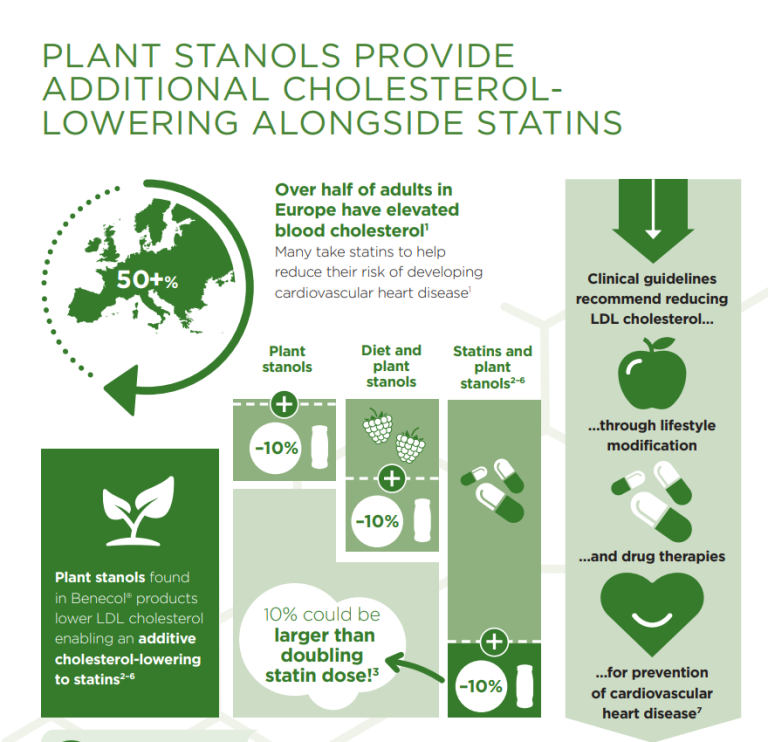
Because plant stanols resemble cholesterol structurally, they compete with it during digestion. This means less dietary cholesterol is absorbed into your bloodstream, which in turn can lead to lower levels of LDL (often called “bad”) cholesterol. Importantly, this works alongside other strategies — including statin medication — to help manage cholesterol effectively.
Clinical Impact You Can See
Research shows that a daily intake of 1.5–3 grams of plant stanols — roughly what you’d get from regular consumption of Benecol products — can reduce LDL cholesterol by about 7–12.5 % in just 2–3 weeks.
That means if you’re looking for a simple, dietary way to support heart health — whether you’re managing high cholesterol or complementing medication — incorporating plant stanols can be a valuable part of your routine.